recess, any year
Two corners of a page. A few soldiers drawn in each. One ballpen, and a rule everybody knew: hold the pen upright, press, and flick. Pitikan is that game, kept exactly the way it felt.

"Pitikan" is Filipino for flicking — the schoolyard game some called Lead Wars.
The whole class knew this game, and nobody remembers who taught it to them.
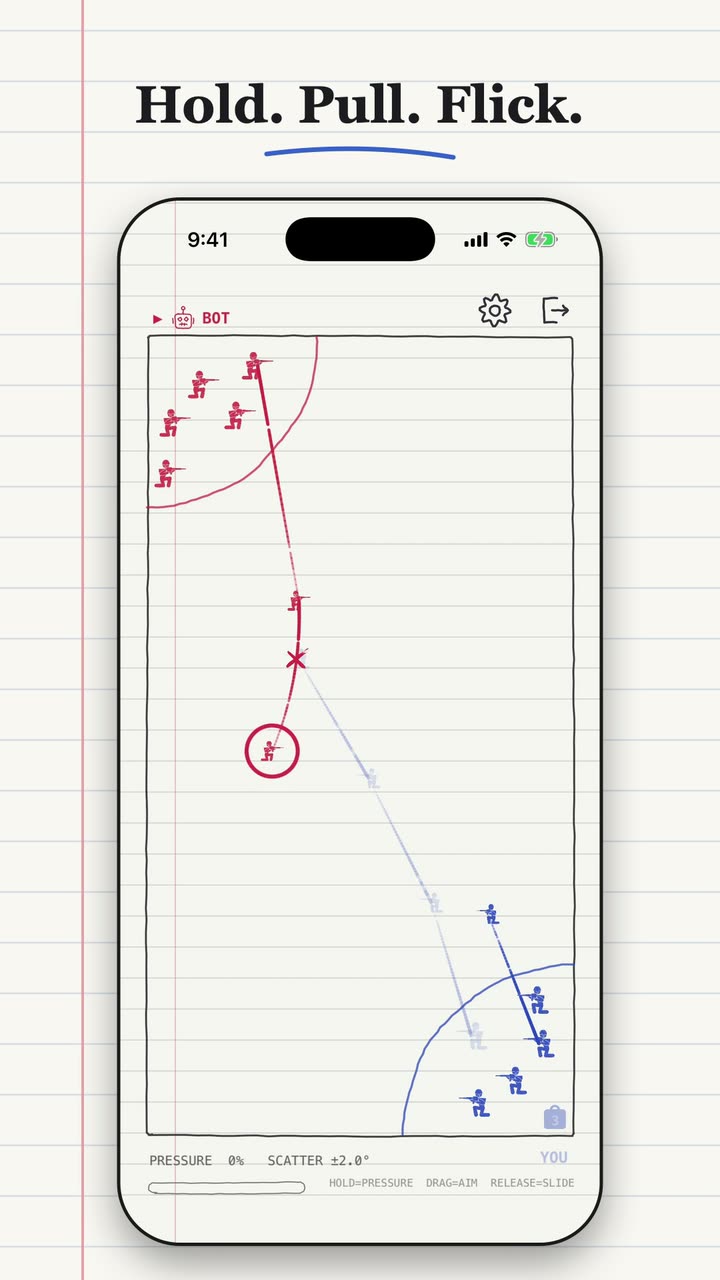
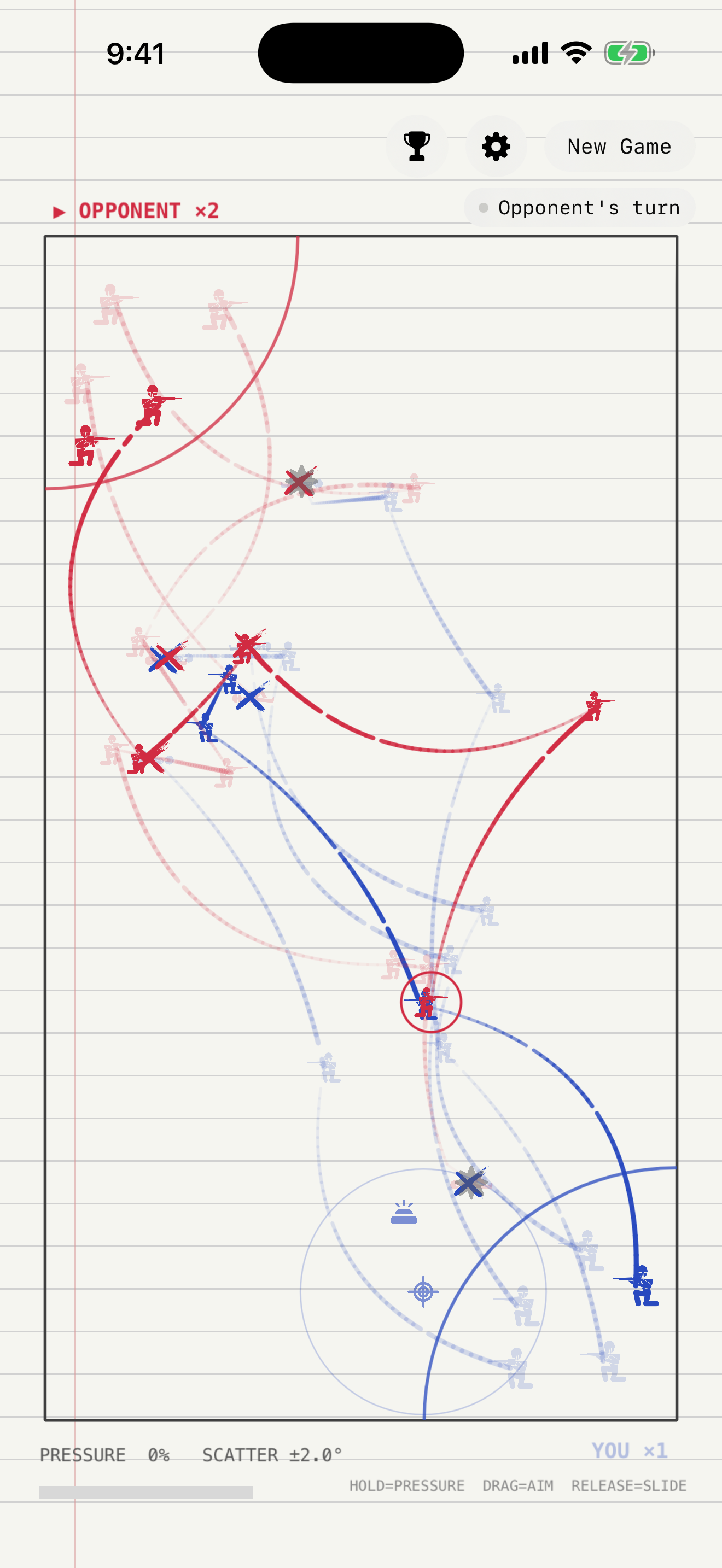
Touch and hold. Pressure builds, the way it did when you pressed the pen tip into the paper and waited for the right moment.
Pull back like a slingshot. A dashed line shows where you mean to go. A long, hard hold goes far but bends and scatters.
Let go. The pen slides, the line stays on the page, and your soldier stands wherever it stopped. Cross an enemy and he's down.
Everything the paper version had, and a few things we hid in the margins.
Quick and light goes short and true. Long and hard goes far and wild, skidding sideways like a real ballpoint on a desk. You feel the difference.
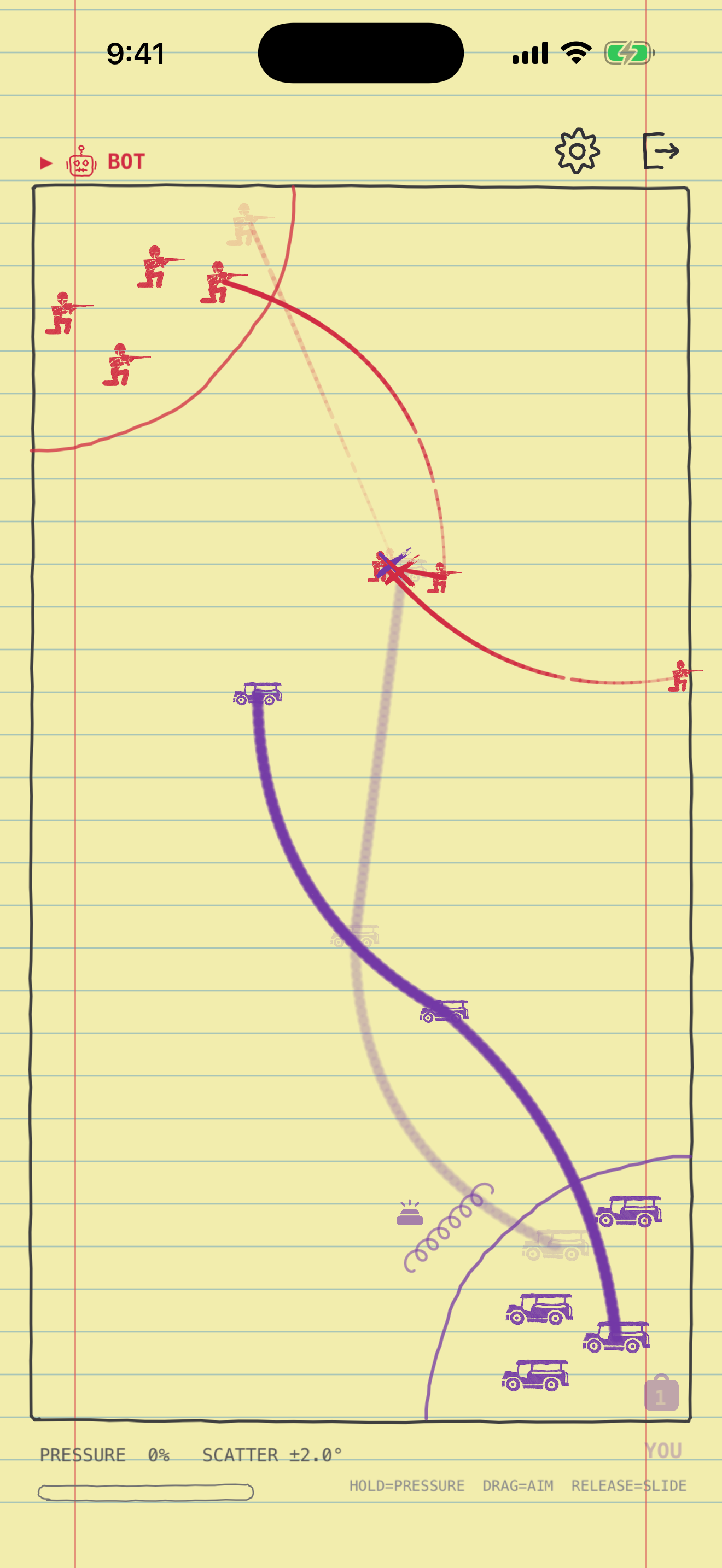
Every line stays on the page. Your pen stops short of the enemy's fresh ink, so where you draw matters as much as where you land.
A soldier outside his base is fair game. Cross him and he goes down with an X, and the next one steps out. Win by reaching the enemy corner or taking every soldier they have.
When an enemy comes close, every soldier still at home can take the shot without leaving. Nobody rushes a corner for free.
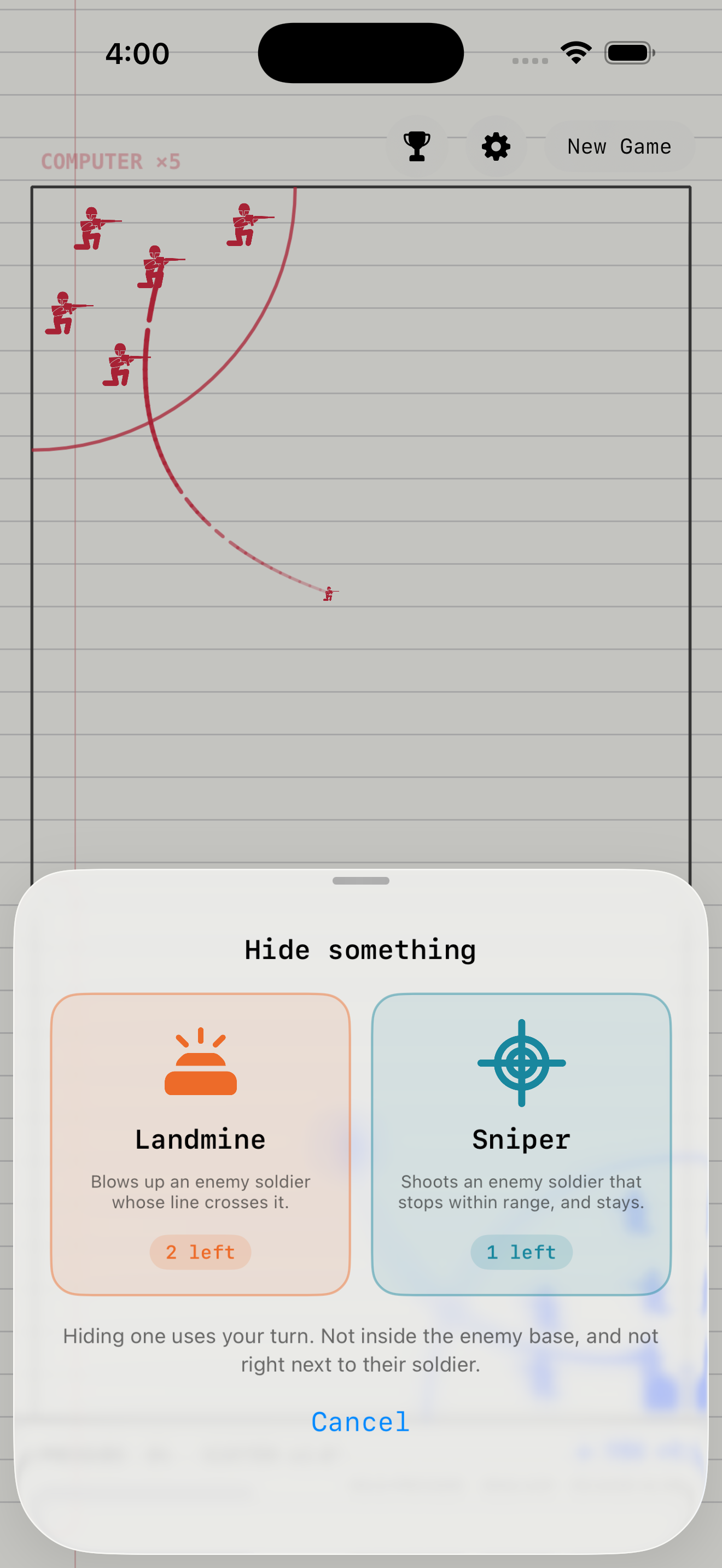
Hide them anywhere on the page. Your opponent can't see them. A line that crosses a mine stops right there, and a soldier who lands near a sniper doesn't get up.
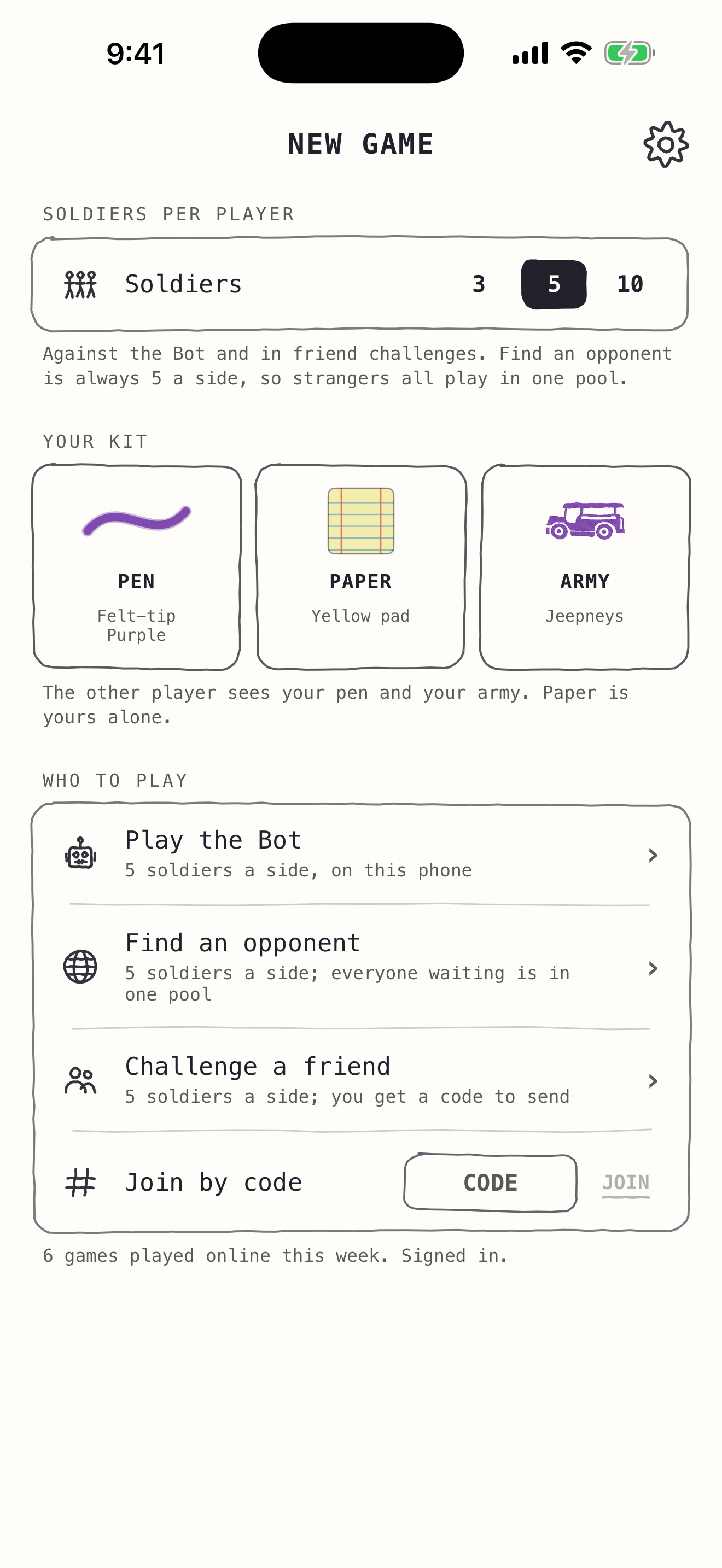
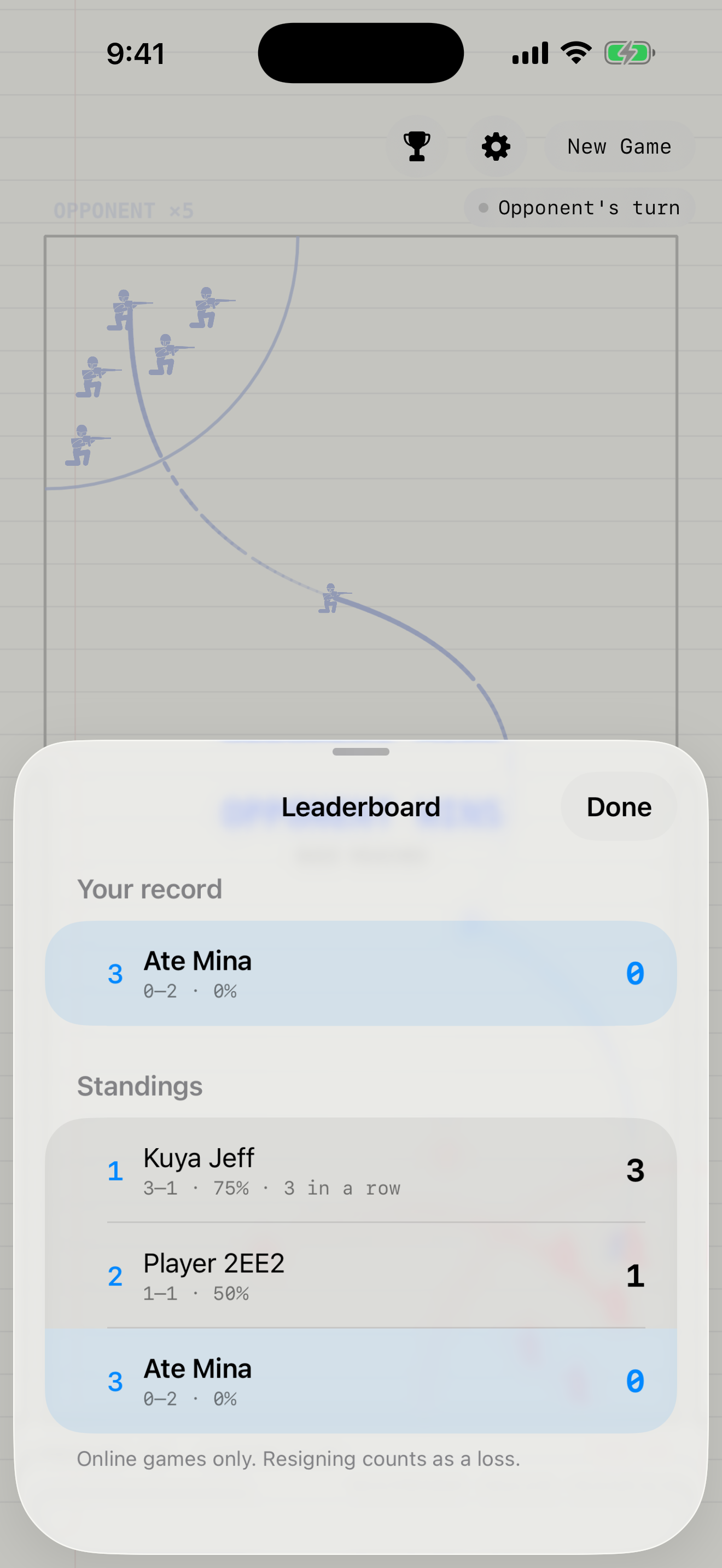
Play the computer offline. Send a friend a six-letter code, or find a stranger, and pass turns all day with a nudge when it's your move. Every online game counts on the leaderboard.
Ruled paper. A red margin line. The scratch of a dry ballpoint.